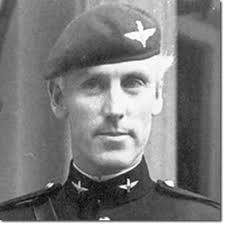
Chris Keeble
Chris Keeble (Born 1941)
- Took command of 2nd Battalion, the Parachute Regiment at approximately 0935 hours on 28 May 1982 — minutes after the death of Lieutenant Colonel H. Jones VC at Darwin Hill — and within thirty hours had reorganised the battalion's tactical disposition, brought up the artillery and mortar fire support that had been lacking, and negotiated the formal surrender of the Argentine garrison at Goose Green, taking approximately 1,200 prisoners without further significant British casualties.1Wikipedia — Chris Keeble ↗
- Knelt alone in prayer amongst the burning gorse before sending two captured Argentine Air Force prisoners back to their lines as messengers carrying surrender terms — including a tactically calibrated bluff threatening a fictitious large-scale British assault supported by artillery — a combination of personal religious reflection and operational psychological pressure that produced an Argentine surrender without further fighting and the formal ceremony at which the garrison marched out, paraded their colours and laid down arms with dignity preserved.2Wikipedia — Battle of Goose Green ↗
- Has been studied at Sandhurst and elsewhere as one of the cleanest worked examples in modern British military history of Auftragstaktik in practice — a subordinate officer who understood his commander's intent clearly enough to execute it differently and better when contact with the enemy disrupted the original plan, then deferred public credit to his predecessor's memory throughout the subsequent four decades, retired from the Army as a Colonel in 1987, and built a second career as a leadership writer and consultant on the ethical dimensions of business transformation.3Keeble — Conflict, Compromise and Care ↗
Christopher Patrick Benedict Keeble was born on 14 November 1941 in Quetta, British India, and was educated at the Roman Catholic Douai School in Berkshire and at the Royal Military Academy Sandhurst.1Wikipedia — Chris Keeble ↗ He was commissioned into the Royal Leicestershire Regiment in 1963, transferred to the Royal Anglian Regiment after his original regiment's amalgamation in 1964, served in conventional regimental and staff appointments through the 1960s, and joined the Parachute Regiment in 1971 or 1972. He was promoted to major while serving with 10 Para in 1975, was appointed Battalion Second-in-Command of 2nd Battalion the Parachute Regiment, and by the time of the Falklands deployment in April 1982 was forty years old, a competent and well-regarded major with a reputation for thoughtful professionalism, deep Catholic faith, and personal restraint. The framework reads three distinct phases of his career, but the canonical snapshot is the approximately thirty hours from 0935 on 28 May 1982 until the Argentine surrender on 29 May. The analytical context is essential. The death of Lieutenant Colonel H. Jones at Darwin Hill on the morning of 28 May 1982 produced one of the cleanest cases in modern British military history of inheritance under maximum operational duress. The battalion was committed to an attack that was visibly stalled. A Company was pinned. One in six of his soldiers were already killed or wounded. The battalion was largely out of ammunition, had been without sleep for forty hours, and was vulnerable to an Argentine counter-attack. The original battle plan, criticised by subsequent military-historical analysis as over-controlled and under-resourced, had failed to break the Argentine defence. The CO was dead. The expected operational tempo had collapsed. Within thirty minutes Keeble had assumed command. Within four hours he had reorganised the battalion's dispositions, brought up the fire support that had been lacking through the morning, and stabilised the tactical position. By the following afternoon the Argentine garrison had surrendered. The Defined Output during the canonical snapshot was substantial.2Wikipedia — Battle of Goose Green ↗ The capture of Goose Green was completed. The Argentine garrison of approximately 1,200 personnel surrendered. British casualties during the Keeble command period were minimal. The route toward Stanley was opened. The strategic effects of the action — the first British land victory of the war, the moral collapse of Argentine confidence in defending the islands, the consolidation of British task force initiative — were achieved largely under Keeble's operational direction, though the contemporary public credit and the Victoria Cross went to his predecessor. The Process variable in his canonical snapshot reads strong because the operational process Keeble executed worked: the artillery and mortar fire missions were called in, the company commanders were given mission-type orders rather than over-controlled instructions, the surrender negotiation was conducted with documented terms, and the formal surrender ceremony was choreographed to allow the Argentine garrison to retire with dignity. The surrender approach itself merits framework attention because it combined personal religious reflection with calibrated operational deception. Keeble, a devout Catholic, knelt alone in prayer amongst the burning gorse before deciding on the approach. The actual surrender messages he sent — carried by two captured Argentine Air Force prisoners back to their own lines — included a tactical bluff: a threatened fictitious large-scale British assault supported by artillery that 2 Para did not in fact possess in the strength implied. The Argentine commanders, Lieutenant Colonel Ítalo Piaggi of the Army and Vice Commodore Wilson Pedrozo of the Air Force, accepted the terms. The Congruence variable scores high not despite this tactical bluff but in the framework's correct reading of it: the structural alignment between Keeble's stated values, his personal conduct, and his actual treatment of his soldiers and the defeated enemy was real, and a calibrated bluff in a surrender negotiation is operational communication rather than structural say-do gap. The formal surrender ceremony at which the Argentine forces marched out, paraded their colours and laid down arms was Keeble's personal decision and produced lasting strategic Value — Piaggi and Pedrozo spoke later of the dignity of the surrender, which contributed to the relatively cooperative Argentine handover process across the islands in the days that followed. The Ego variable scores at the framework's floor of 3 and is one of the dataset's clearest examples of low Ego in a position that almost compels Ego inflation. Keeble could have claimed the operational credit at Goose Green. He never did. His public statement on receiving the Distinguished Service Order — "the victory was H's; my role was merely to act on his behalf in his absence; for that I am the caretaker of an enamelled bit of metal which I carry on behalf of every man in 2 PARA" — captures the framework reading precisely. He accepted that Jones would receive the Victoria Cross. He accepted that Jones would receive the public recognition. He gave no media interviews about his own command of the battalion for many years and waited until 2011 — twenty-nine years after the action — to publish his own account in Conflict, Compromise and Care.3Keeble — Conflict, Compromise and Care ↗ The Pride variable scores at the same floor. Keeble showed no defensive rigidity at any point in the inheritance: he revised the battle plan completely, he took advice from his company commanders and the Royal Marines liaison Captain Rod Bell, and he treated the surrender negotiation as an open question rather than a fixed outcome. The Humility variable scores high and is structurally connected to the Ego and Pride readings. Keeble's epistemic humility during the command period was real — he listened to subordinates, acknowledged uncertainty about whether the surrender approach would work, made decisions while accepting that they might fail. His personal humility in the years following has been equally real. The combination of low Ego, low Pride, high Humility, high Congruence is what produces the framework's distinctively positive reading of Keeble compared to the more contested reading of his predecessor. The two profiles together — Jones at canonical Goose Green, Keeble at canonical Goose Green, same battalion, same battle, sequential commands — form one of the dataset's worked examples of how the framework distinguishes between operational courage that delivers a contested outcome at high cost, and Auftragstaktik inheritance that delivers a clean outcome at low cost. The Battle of Goose Green Wikipedia article makes the framework reading explicit: Keeble's flexible style of command and the autonomy he afforded his company commanders were materially more successful than the rigid control and adherence to plan exercised by Jones. The k variable for the Keeble canonical snapshot scores moderately positive. The defining external arrivals during the thirty hours of his command worked broadly in his favour: Piaggi's willingness to negotiate when the surrender messengers reached him; the artillery and mortar fire support arriving in time; the Argentine garrison's morale collapse after Darwin Hill fell; the weather not deteriorating further. The world ran somewhat in Keeble's favour during the snapshot, but the bulk of the outcome was earned through the quality of the decisions he made in the hours after Jones's death. The Recognition variable scores in the upper-mid band, reflecting the structural fact that distinguishes Keeble from Jones in the public record. Recognition from legitimate stakeholders inside the army — Brigade, Northwood, his peer officers, the subsequent generations of Sandhurst students who study the action — was substantial and immediate, evidenced by the Distinguished Service Order. Recognition from the broader public was modest, because Jones got the VC and the mythology and Keeble accepted that this was correct. The pre-Goose Green snapshot, covering Keeble's period as battalion 2IC including the four weeks during which he operated as effective acting commander while Jones was at Ascension Island linking with 3 Commando Brigade staff, reads modestly. The preparation was professional but the variables that score high in the canonical snapshot — Defined Output, Recognition, Visibility, Conviction tested under fire — were untested and therefore read at mid-band. The post-Goose Green snapshot, covering his continued service through the rest of the Falklands campaign as 2IC under Lieutenant Colonel David Chaundler, his later promotion to Colonel, his retirement from the Army in 1987, and his second career as a leadership writer and consultant providing instruction on balancing the ethic of business transformation with the ethic of people's flourishing, reads at moderate values across most variables. He never had another opportunity to lead a decisive military operation. His Visibility variable rises in this period as his writing and consulting work reached a wider audience, and his Recognition rises as the analytical reassessment of Goose Green has gradually elevated his role. The framework records what he did at Goose Green as the canonical reading because that is the period when the variables compressed and tested.
Score Comparison
Add up to 10 leaders. Click a name to visit their profile.
The 13 Equations
Scores for: Goose Green Command — 28 to 29 May 1982The 22 Variables
Canonical scoresWhat changed: Battalion 2IC pre-Goose Green — 1980 to May 1982 → Goose Green Command — 28 to 29 May 1982
Sources & Bibliography
The scores assigned to this leader are derived from publicly available sources. Variable inputs reflect documented behaviour, structural conditions, and historical record at the time of each snapshot.
- Wikipedia — Chris Keeble
- Wikipedia — Battle of Goose Green
- Keeble, C. — Conflict, Compromise and Care: Leading Through Crisis (2011)
- Adkin, M. — Goose Green: A Battle is Fought to be Won (1992)
- Fitz-Gibbon, S. — Not Mentioned in Despatches: The History and Mythology of the Battle of Goose Green (1995)
- Paradata — Major Chris Keeble's account of Goose Green