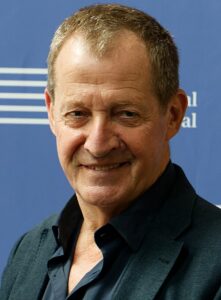
Alastair Campbell
Alastair Campbell (Born 1957)
- Served as Tony Blair's chief political communications operator from October 1994 to August 2003 — Press Secretary 1994-1997, Chief Press Secretary at Number 10 Downing Street 1997-2000, and Director of Communications and Strategy 2000-2003 — operating as the principal architect of the New Labour media operation that secured three consecutive general election victories (1997, 2001, 2005) and that established the political-communications template that defined British government media management for a generation.1Wikipedia — Alastair Campbell ↗
- Was the central figure in the September 2002 Iraq dossier and the subsequent David Kelly affair — drove the production and presentation of the Joint Intelligence Committee dossier including its disputed claim that Iraqi weapons of mass destruction could be deployed within 45 minutes, became the focus of the BBC "sexed up" allegation broadcast by Andrew Gilligan in May 2003, was named by the Hutton Inquiry as the source the BBC had quoted, and resigned as Director of Communications on 29 August 2003 in the immediate aftermath of weapons inspector David Kelly's death by suicide on 17 July 2003.2Wikipedia — Hutton Inquiry ↗
- Co-founded The Rest Is Politics podcast with former Conservative MP Rory Stewart in March 2022 — building it into one of the most listened-to political podcasts in the English-speaking world with reported weekly download numbers in the millions, generating substantial commercial revenue through Goalhanger Films production, expanding into multiple format extensions including Leading and live theatre tours, and operating as a defining British political-media franchise that has reshaped the political-commentary economy alongside published bestselling diaries (multiple volumes from 2007), sustained mental health advocacy work, and continued anti-Brexit and pro-democracy political campaigning.3Wikipedia — The Rest Is Politics ↗
Alastair John Campbell was born on 25 May 1957 in Keighley, Yorkshire, the son of John Campbell, a veterinary surgeon, and Elizabeth Caldwell, both of whom had been raised in the Western Isles of Scotland.1Wikipedia — Alastair Campbell ↗ He was educated at the City of Leicester Boys' Grammar School and at Gonville and Caius College, Cambridge, where he read Modern Languages graduating in 1979. He began his journalism career on the Tavistock Times in Devon, moved to the Mirror Group in 1980, became political editor of the Daily Mirror in 1989 before moving to Today as political editor in 1991, and returned to the Daily Mirror as assistant editor before being recruited by Tony Blair as press secretary in October 1994 shortly after Blair won the Labour leadership. He has been in a relationship with Fiona Millar since 1979; they have three children. The framework reads three distinct phases of his career. The analytical context for scoring Alastair Campbell requires the framework discipline of recognising that the canonical leadership system being scored is not always the period of maximum institutional authority. Campbell's period of maximum formal authority was 1997-2003 as Tony Blair's Director of Communications, when he held substantial Permission Space inside the most consequential British political operation of the post-war period. But the framework rule that canonical equals the latest snapshot for living and currently active leaders applies to any leader operating a primary leadership system. Campbell's primary leadership system in 2025 is the political-commentary and podcasting operation centred on The Rest Is Politics with Rory Stewart, which produces a sustained Defined Output at substantial scale. The framework reads that as the canonical snapshot, with the 1994-2003 Number 10 period as a non-canonical historical phase that produced higher institutional Defined Output but no longer represents the leader's current leadership system. The tabloid political editor phase from 1980 to 1994 covers Campbell's first fifteen years in journalism. He worked the Mirror Group political beat through the Thatcher and early Major years, became political editor of the Daily Mirror in 1989, moved to Today as political editor in 1991, and returned to the Mirror as assistant editor before joining Labour. The phase was characterised by Campbell's emergence as one of the most operationally aggressive lobby journalists of the period, with sustained Conviction in his Labour-aligned political positioning even when that positioning was professionally costly during the Conservative-dominated 1980s. The Defined Output during this phase reads modestly because political-editor work produces real but bounded outputs at the individual journalist scale. The Recognition reads modestly within the lobby and the political class but not beyond it. The Conviction variable reads in the upper-mid band reflecting sustained directional energy through fifteen years of journalism without significant ideological drift. The phase ended with his recruitment by Blair in summer 1994. The Director of Communications phase from 1994 to 2003 produced the snapshot at which Campbell's institutional Defined Output reads at its peak in the dataset.2Wikipedia — Hutton Inquiry ↗ He served as Press Secretary to the Leader of the Opposition from October 1994 through to the May 1997 election victory, as Chief Press Secretary at Number 10 Downing Street from 1997 to 2000, and as Director of Communications and Strategy from 2000 to August 2003. The substantive Defined Output across this period was substantial: the New Labour political-communications operation that secured three consecutive general election victories, the political-communications template that has been adopted across the British political establishment regardless of party, the post-Diana royal response of August-September 1997, the Good Friday Agreement communications of April 1998, the Kosovo war messaging of 1999, and the political coordination of the Number 10 lobby briefing system that operated as the principal channel between the British government and the political press for nine years. The Recognition variable reads at substantial levels during the period, with Campbell described in successive lobby journalist accounts as the most powerful unelected figure in British government and as a co-equal political-strategic presence to Blair himself in the Number 10 operation. The Phase 2 Congruence variable reads at lower levels than other phases because the Iraq War communications of 2002-2003 introduced a substantial say-do gap that the framework should register honestly. The September 2002 Iraq dossier was driven through the Number 10 communications operation under Campbell's authority, including the disputed presentation of the Joint Intelligence Committee assessment that Iraqi weapons of mass destruction could be deployed within 45 minutes — language that subsequent inquiries including the Chilcot Inquiry of 2016 characterised as having been more confident than the underlying intelligence supported. The May 2003 BBC "sexed up" allegation broadcast by Andrew Gilligan, the subsequent identification of weapons inspector David Kelly as Gilligan's source, Kelly's death by suicide on 17 July 2003, and the Hutton Inquiry that followed produced the central Congruence question of Campbell's career. The Hutton Inquiry of January 2004 found that the BBC's allegation against Campbell had not been substantiated and that Kelly had been the source of the broadcast claim that was "unfounded". Subsequent inquiries including Chilcot have been more critical of the broader 2002-2003 dossier and intelligence communications process. Campbell resigned as Director of Communications on 29 August 2003. The Phase 2 Pride variable reads at upper-mid levels reflecting the sustained refusal during the BBC confrontation period to accept the political damage of the dossier role beyond what the Hutton Inquiry's specific findings would later support. The Confidence variable in Phase 2 reads at the upper band reflecting the projected certainty Campbell maintained throughout the period, which was substantially tethered to his operational track record through 1997-2002 and which became un-tethered to underlying reality during the dossier and BBC confrontation periods of 2002-2003. The Ego variable reads at upper-mid levels because the Director of Communications role with the strategic authority Campbell exercised was substantially fused with his personal identity, reflected in the visible difficulty contemporaries reported in distinguishing the Number 10 communications operation from Campbell himself. The k variable for Phase 2 scores moderately negative reflecting the genuine externally-arriving complications of the David Kelly affair, the BBC confrontation, and the timing of Kelly's suicide in relation to the Foreign Affairs Committee evidence Kelly had given. The broader unpopularity of the Iraq War was foreseeable Environment rather than k. The commentator and podcaster phase from 2003 to the present is the canonical snapshot under the framework rule for living and currently active leaders.3Wikipedia — The Rest Is Politics ↗ After his 2003 resignation Campbell published the first volume of his diaries in 2007, served as a campaign consultant on Labour's 2005 election operation, ran for and against multiple political projects across the post-2010 period, became a substantial mental health advocate including through the publication of his memoir of depression Living Better in 2020, and was a leading anti-Brexit campaigner from 2016 onwards. The Rest Is Politics podcast launched in March 2022 with former Conservative MP Rory Stewart as co-host, with the Campbell-Stewart partnership operating as a cross-political-spectrum democracy-defence and anti-populism vehicle. The podcast has become one of the most listened-to political podcasts in the English-speaking world with weekly download numbers in the millions through 2025, has spawned multiple format extensions including Leading and Question Time-style live theatre tours, and has reshaped the political-commentary economy in ways that the framework should register as substantial Defined Output for an independent media operation. The Phase 3 Congruence variable reads in the mid-band reflecting strong alignment between Campbell's stated Phase 3 values (democracy defence, anti-populism, evidence-based political analysis, mental health advocacy, anti-Brexit campaigning) and his observed conduct, while the historical Phase 2 Congruence questions continue to affect public perception in ways the framework reads honestly. Campbell has been publicly self-critical of his Iraq period in his diaries and in interviews to an unusual degree for a political figure, but the self-criticism has not extended to a full structural acknowledgment of the dossier role that would settle the historical record. The Pride variable reads at mid-band — selective rigidity on the strategic core of his political commentary, more flexible on tactical positions, no Pride-driven failure pattern. The Conviction variable reads at the upper band reflecting sustained directional energy across the post-2003 period through multiple political defeats including the 2010 Labour loss, the 2015 Labour loss, the 2016 Brexit referendum loss, the 2019 Labour loss, with the directional energy sustained without significant ideological drift. The Defined Output for the canonical snapshot reads at substantial levels: multiple bestselling diary volumes, the podcast as a defining British political-media franchise, sustained mental health advocacy work, continued anti-Brexit and pro-democracy political commentary that has shaped public discussion. The Recognition variable reads at the upper band reflecting Campbell's status as one of the most recognisable British political commentators of his generation. The Visibility variable reads at the upper band reflecting sustained media presence across podcast, broadcast, print, and public events. The k variable scores mildly positive reflecting the substantial favourable arrival of post-2022 political instability — the Russia invasion of Ukraine, the Truss premiership disaster of autumn 2022, the broader populism question across Britain and the United States, the Trump return to the US presidency in January 2025 — that has driven sustained demand for political commentary and that has positioned The Rest Is Politics in territory it had not been built to occupy when launched. The framework reads Campbell's Phase 3 leadership as a structurally functional independent commentary operation that has built substantial cultural and commercial scale through sustained Conviction and operational discipline, with the Phase 2 historical Congruence questions remaining as a feature of his public reading rather than as an active drag on his Phase 3 system.
Score Comparison
The 13 Equations
Scores for: Tabloid Political Editor — 1980 to 1994The 22 Variables
Canonical scoresSources & Bibliography
The scores assigned to this leader are derived from publicly available sources. Variable inputs reflect documented behaviour, structural conditions, and historical record at the time of each snapshot.
- Wikipedia — Alastair Campbell
- Wikipedia — Hutton Inquiry
- Wikipedia — The Rest Is Politics
- Campbell, A. — The Blair Years: Extracts from the Alastair Campbell Diaries (2007)
- Campbell, A. — Living Better: How I Learned to Survive Depression (2020)
- Oborne, P. — Alastair Campbell, New Labour and the Rise of the Media Class (1999)