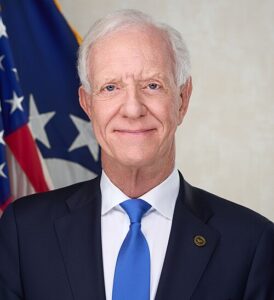
Chesley Sullenberger
Chesley Sullenberger (Born 1951)
- Successfully ditched US Airways Flight 1549 onto the Hudson River on 15 January 2009 — completing a 208-second emergency response from the moment of dual-engine failure following a Canada goose strike at approximately 2,818 feet above LaGuardia Airport, gliding the Airbus A320 to a powered-off water landing that resulted in zero fatalities among the 155 passengers and crew, with the National Transportation Safety Board subsequently ruling that the water landing was the correct decision and that simulations of an attempted return to LaGuardia had succeeded only by neglecting the time required for human assessment of the situation.1Wikipedia — US Airways Flight 1549 ↗
- Has spent the period from 2009 to the present operating as a sustained advocate for aviation safety, pilot experience standards, and high-reliability organisational practice — testifying before Congress on pilot pension protection and experience requirements following the February 2009 Colgan Air Flight 3407 crash, contributing to the FAA rulemaking that produced the 1500-hour Airline Transport Pilot certification requirement of 2013, founding the consulting firm Safety Reliability Methods Inc which applies high-reliability methodology across aviation, healthcare, and other high-consequence industries, and co-chairing the Experimental Aircraft Association's Young Eagles youth aviation programme from 2009 to 2013 alongside his Flight 1549 first officer Jeffrey Skiles.2Wikipedia — Chesley Sullenberger ↗
- Served as the United States Ambassador to the International Civil Aviation Organization with the rank of Ambassador from 3 February 2022 to 1 July 2022 — having been nominated by President Joe Biden in June 2021 and confirmed by unanimous consent of the United States Senate in December 2021, during which tenure he addressed the aviation regulatory questions arising from the Belarus diversion of Ryanair Flight 4978, the Russian invasion of Ukraine, the Middle East airspace disputes, and the climate change implications for international aviation policy, before resuming private-sector keynote speaking, safety advocacy, and public democratic engagement on returning from Montreal.3Chesley Sullenberger — Official Website ↗
Chesley Burnett Sullenberger III was born on 23 January 1951 in Denison, Texas, the elder of two children of Chesley Burnett Sullenberger Jr, a dentist, and Ella, a primary-school teacher.2Wikipedia — Chesley Sullenberger ↗ He learned to fly at age sixteen at a private airstrip near his home in Denison, graduated from Denison High School near the top of his class of 350, and matriculated at the United States Air Force Academy in 1969 reading psychology with the Outstanding Cadet in Airmanship Award on graduation in 1973. He earned a Master of Science in industrial psychology from Purdue University in 1973 and a Master of Public Administration from the University of Northern Colorado in 1979. He served as a United States Air Force F-4 Phantom II fighter pilot from 1973 to 1980, reaching the rank of captain, serving as flight leader and training officer with the 493rd Tactical Fighter Squadron based in the United Kingdom, and serving on the United States Air Force aircraft accident investigation board. He has been married to Lorraine Sullenberger since 1989; they have two adopted daughters. The framework reads two distinct phases of his career, with the singular event of Flight 1549 sitting at the boundary between them. The analytical context for scoring Sullenberger requires the framework to be honest about what kind of leader he is and at what timescale his leadership system operates. Flight 1549 was a 208-second event during which a pilot made the correct decisions under maximum operational pressure and saved 155 lives. The event is read in detail as a worked example of the Authority Equation in Case Study 10.2 of this book, where the framework demonstrates that the convergence of Conviction, Recognition, and Ability under irreversible time pressure produced the survival outcome. The variable readings in the case study operate at the timescale of the event itself. The profile, by contrast, scores Sullenberger as a sustained leadership system across half a century, of which Flight 1549 is the most visible moment but not the substance. The Phase 1 reading captures the forty years of preparation that produced the Flight 1549 outcome and counts the event as the terminal Defined Output of that phase. The Phase 2 canonical reading captures the seventeen years of sustained aviation safety advocacy that the event enabled, which the framework reads as the operationally consequential leadership system Sullenberger has run since 2009. The military aviation and US Airways career phase from 1969 to 2009 covers Sullenberger's first forty years in aviation. He completed Air Force Academy training in 1973 and served as an F-4 Phantom fighter pilot until 1980, accumulating accident-investigation experience that would prove substantively relevant to his subsequent career. He began commercial flying with US Airways in 1980 and remained with the airline for thirty years until his retirement on 3 March 2010. By January 2009 he had logged 19,663 total flight hours including 4,765 hours on the Airbus A320 type. He had earned glider ratings, served as a US Airways Air Line Pilots Association safety chairman, and operated a small aviation safety consulting practice prior to Flight 1549. The phase culminated on 15 January 2009 when, approximately 100 seconds after takeoff from LaGuardia Airport, the Airbus A320 he was commanding encountered a flock of Canada geese at an altitude of 2,818 feet, suffering near-total thrust loss in both engines. Sullenberger took control from First Officer Jeffrey Skiles, assessed and rejected returns to LaGuardia and Teterboro airports as infeasible, communicated the water-landing decision to air traffic control, and glided the powered-off aircraft to a controlled water landing on the Hudson River in approximately 208 seconds total elapsed time. All 155 passengers and crew survived. Sullenberger walked the cabin twice to confirm evacuation and was the last person to leave the aircraft. The National Transportation Safety Board subsequently ruled that the water landing was the correct decision, finding that Airbus simulations showing a possible return to LaGuardia had succeeded only by neglecting the time required for human assessment of the situation.1Wikipedia — US Airways Flight 1549 ↗ The Phase 1 Defined Output across this period was substantial within its operational scale: thirty years of incident-free commercial flying at major-airline scale, sustained accident investigation contribution, professional safety committee work, growing expertise that would prove operationally consequential when the moment required it, and the Flight 1549 outcome itself as the terminal demonstration of the accumulated experience. The Conviction variable for the phase reads at strong levels reflecting forty years of sustained directional energy through aviation safety as a professional discipline. The Congruence variable reads at high levels reflecting unusually sustained alignment between stated professional values and observable conduct across the career — the framework's reading of Sullenberger as a leader whose Congruence operates at near-ceiling levels begins in Phase 1 rather than emerging only with Flight 1549. The Process variable reads at upper levels reflecting the checklist culture, post-flight analysis discipline, and accident investigation rigour that defined the period. The Visibility variable reads at low levels for most of the phase, reflecting that Sullenberger was operationally unknown to the broader public until the final hours of the phase, when global media saturation arrived almost instantly following the Hudson outcome. The aviation safety advocate, public voice, and ICAO ambassador phase from 2009 to the present is the canonical snapshot under the framework rule for living and currently active leaders.3Chesley Sullenberger — Official Website ↗ The Phase 2 leadership system has run for seventeen years and is operationally distinct from the Flight 1549 event. The substantive Phase 2 outputs include sustained Congressional testimony on aviation safety policy beginning February 2009, when Sullenberger appeared before the House Subcommittee on Aviation and warned that pilot pay reductions and pension terminations were producing structural pressure on pilot experience standards in ways that threatened the flying public; substantial influence on the FAA rulemaking process that produced the 2013 Airline Transport Pilot certification requirement of 1,500 flight hours, partially in response to the February 2009 Colgan Air Flight 3407 crash whose contributing factors included pilot fatigue and inexperience; the founding of Safety Reliability Methods Inc as a consulting practice applying high-reliability organisational methodology across aviation, healthcare, and other high-consequence industries; the publication of the 2009 New York Times bestseller Highest Duty: My Search for What Really Matters and the 2012 follow-up Making a Difference: Stories of Vision and Courage from America's Leaders; the co-chairmanship of the Experimental Aircraft Association's Young Eagles youth aviation programme from 2009 to 2013; sustained role as CBS News Aviation and Safety Expert from 2010; sustained suicide prevention advocacy following the death by suicide of his father in 1995; and the diplomatic posting as United States Ambassador to the International Civil Aviation Organization from February to July 2022. The Phase 2 character cluster of variables produces the analytically distinctive Sullenberger profile and the framework's reading of why his canonical leadership has been substantially under-recognised relative to its operational consequence. The Congruence variable reads at near-ceiling levels reflecting unusually sustained alignment between stated values across a fifty-year career (preparation, integrity, safety as primary professional duty, professional standards over short-term economic pressure, democratic norms) and observable conduct without significant ideological drift. The pre-1549 record (sustained aviation safety work, accident investigation contribution, ALPA safety committee), the 1549 conduct (correct decision under pressure, twice through the cabin, last off the plane), and the post-1549 record (Congressional advocacy, sustained safety practice, ICAO posting, public democratic engagement) read as one continuous Congruence pattern rather than three separate ones. The Humility variable reads at near-ceiling levels reflecting Sullenberger's sustained acknowledgment of team contribution, training, preparation, and circumstance rather than personal exceptionalism. His own framing — that the 1549 outcome was the result of forty-two years of small regular deposits in a bank of experience and education — is the framework's reading made explicit by the leader. The Pride variable reads at framework lower-band levels reflecting sustained refusal to claim more than is warranted, sustained openness to correction, and the documented post-traumatic stress symptoms he experienced after Flight 1549 that he chose to disclose publicly rather than conceal. The Ego variable reads at low levels reflecting genuinely modest personal-presentation Ego at his level of public profile — a configuration rare enough in the contemporary public-figure dataset that the framework should register it distinctively. The Defined Output variable for the canonical snapshot reads at upper-mid band levels reflecting the genuinely substantial sustained outputs (two NYT bestsellers, Congressional influence on pilot experience standards, founding of Safety Reliability Methods, ICAO ambassadorship, sustained safety advocacy infrastructure) bounded by the diffuse and influence-mediated nature of Phase 2 outputs versus the direct attribution of Flight 1549 itself within Phase 1. The framework's analytical signal is in the relationship between the two phases — Phase 1 produced direct attribution through the Hudson outcome, but Phase 2 has produced sustained operationally consequential leadership of the aviation safety system that the popular reading does not register as canonical leadership. The Visibility variable has decayed substantially across the canonical period from 2009 peak (when Visibility was at framework ceiling levels in the immediate aftermath of Flight 1549) to current sustained-but-bounded Visibility appropriate to the post-event advocate-and-commentator role. The k variable for the canonical snapshot scores at modestly positive levels reflecting genuinely externally arriving favourable events including the 2009 immediate post-event Presidential attention from George W Bush and Barack Obama, the 2013 FAA rulemaking cycle that took up his pilot-experience advocacy, and the 2021 Biden ICAO nomination — but most of the Phase 2 environment has been foreseeable terrain that Sullenberger has positioned in well rather than externally arriving k. The framework's overall reading of Sullenberger is that of a leader whose canonical Phase 2 system continues to operate seventeen years after the visible event that gave it a platform, whose character cluster reads at the framework upper register on Congruence and Humility while reading at the framework lower register on Ego and Pride, and whose substantial sustained operational influence on aviation safety policy has been substantially under-recognised relative to the public attention given to a 208-second event from 2009. The event itself is read in detail in Case Study 10.2 as a worked example of the Authority Equation under maximum time compression.
Score Comparison
Add up to 10 leaders. Click a name to visit their profile.
The 13 Equations
Scores for: Aviation Safety Advocate, Public Voice, and ICAO Ambassador — 2009 to PresentThe 22 Variables
Canonical scoresWhat changed: Military Aviation and US Airways Career — 1969 to 2009 → Aviation Safety Advocate, Public Voice, and ICAO Ambassador — 2009 to Present
Sources & Bibliography
The scores assigned to this leader are derived from publicly available sources. Variable inputs reflect documented behaviour, structural conditions, and historical record at the time of each snapshot.
- Wikipedia — US Airways Flight 1549
- Wikipedia — Chesley Sullenberger
- Chesley Sullenberger — Official Website
- Sullenberger, C. — Highest Duty: My Search for What Really Matters (2009)
- National Transportation Safety Board — Aircraft Accident Report AAR-10/03
- Federal Aviation Administration — Pilot Certification and Qualification Requirements for Air Carrier Operations 2013