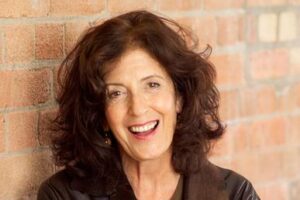
Anita Roddick
Anita Roddick - 1942-2007
- Founded The Body Shop in Brighton in 1976 with a £6,500 bank loan and no business training, building it into a global franchise of more than 2,000 stores operating in over fifty countries and valued at £652 million when acquired by L'Oréal in 2006 — achieving this growth without conventional advertising, relying instead on product information, in-store campaigning and public advocacy to generate media coverage estimated at the equivalent of ninety-six million dollars in advertising value.1Wikipedia — Anita Roddick ↗
- Pioneered ethical consumerism as a business model before the term existed — refusing animal testing, introducing Community Trade sourcing from developing world producers, using minimal and refillable packaging, and embedding active campaigns for Amnesty International, Greenpeace and the Big Issue into the retail environment — demonstrating that the Value variable in the Codex framework can function as a competitive commercial differentiator rather than a constraint on commercial performance.2Britannica — Anita Roddick ↗ (NB: The Body Shop faced documented challenges to some of its ethical claims, including a 1989 German court ruling on animal testing labelling and a 1994 Business Ethics article; the Congruence variable reflects these complications.)
- Donated her entire £51 million fortune to charities upon her death in 2007 — having pledged during her lifetime to leave nothing to her family — and left a documented institutional legacy in which the ethical consumerism model she pioneered had by then become standard practice across the global cosmetics industry, with every major competitor having introduced cruelty-free product lines in direct response to the commercial pressure she created.1Wikipedia — Anita Roddick ↗
Anita Lucia Perella was born on 23 October 1942 in Littlehampton, Sussex, in a bomb shelter, the third of four children of Italian immigrant parents who ran a café.1Wikipedia — Anita Roddick ↗ She trained as a schoolteacher, worked at the United Nations in Geneva, travelled extensively through Africa, Australia and the Pacific observing indigenous body care practices, married Gordon Roddick in 1970, and opened the first Body Shop in Brighton on 26 March 1976 — initially as a means of supporting herself and her two daughters while Gordon rode a horse from Buenos Aires to New York. The analytical entry point for Roddick's profile is the relationship between Value and commercial performance. Conventional business analysis treats ethical commitments as cost centres — expenses that reduce margin without producing revenue. Roddick's profile provides one of the most analytically precise test cases in the Codex dataset for the contrary proposition: that authentic, documented Value alignment can drive commercial performance by creating customer loyalty, media attention and brand differentiation that conventional advertising expenditure cannot replicate at equivalent cost.3Entrepreneur — Anita Roddick ↗ The Congruence variable carries a specific analytical complication that the equations must record honestly. Roddick stated repeatedly that The Body Shop did not test its products on animals. This was challenged in Germany and by a 1994 Business Ethics investigation, which raised questions about whether ingredients sourced from third parties had been tested on animals before The Body Shop purchased them.4Encyclopedia.com — Anita Roddick ↗ Roddick sued and settled some of these challenges, and The Body Shop subsequently changed its labelling from 'not tested on animals' to 'against animal testing' — a materially different and more defensible claim. The Congruence variable in her canonical snapshot reflects a score that is very high but not at its ceiling: the aspiration and the documented conduct were genuinely aligned in their direction, but the precision of the claims she made about her own practices exceeded what she could fully substantiate. The sale to L'Oréal in 2006 — a company with documented animal testing practices and part-owned by Nestlé, which had its own ethical controversies — is the most analytically significant Congruence event of her later career. She described herself as a 'Trojan horse' within L'Oréal, intending to change the company from inside. Whether that framing was genuine or post-hoc rationalisation is analytically indeterminate. The L'Oréal acquisition is recorded in the profile as a Congruence and Value complication, not as a refutation of her overall leadership record. She was appointed DBE in 2003. She died on 10 September 2007 of a massive stroke. As she promised, her entire estate went to charity.
Score Comparison
The 13 Equations
Scores for: L'Oréal Sale — Congruence ChallengeThe 22 Variables
Canonical scoresWhat changed: Body Shop — Global Franchise Peak → L'Oréal Sale — Congruence Challenge
Sources & Bibliography
The scores assigned to this leader are derived from publicly available sources. Variable inputs reflect documented behaviour, structural conditions, and historical record at the time of each snapshot.